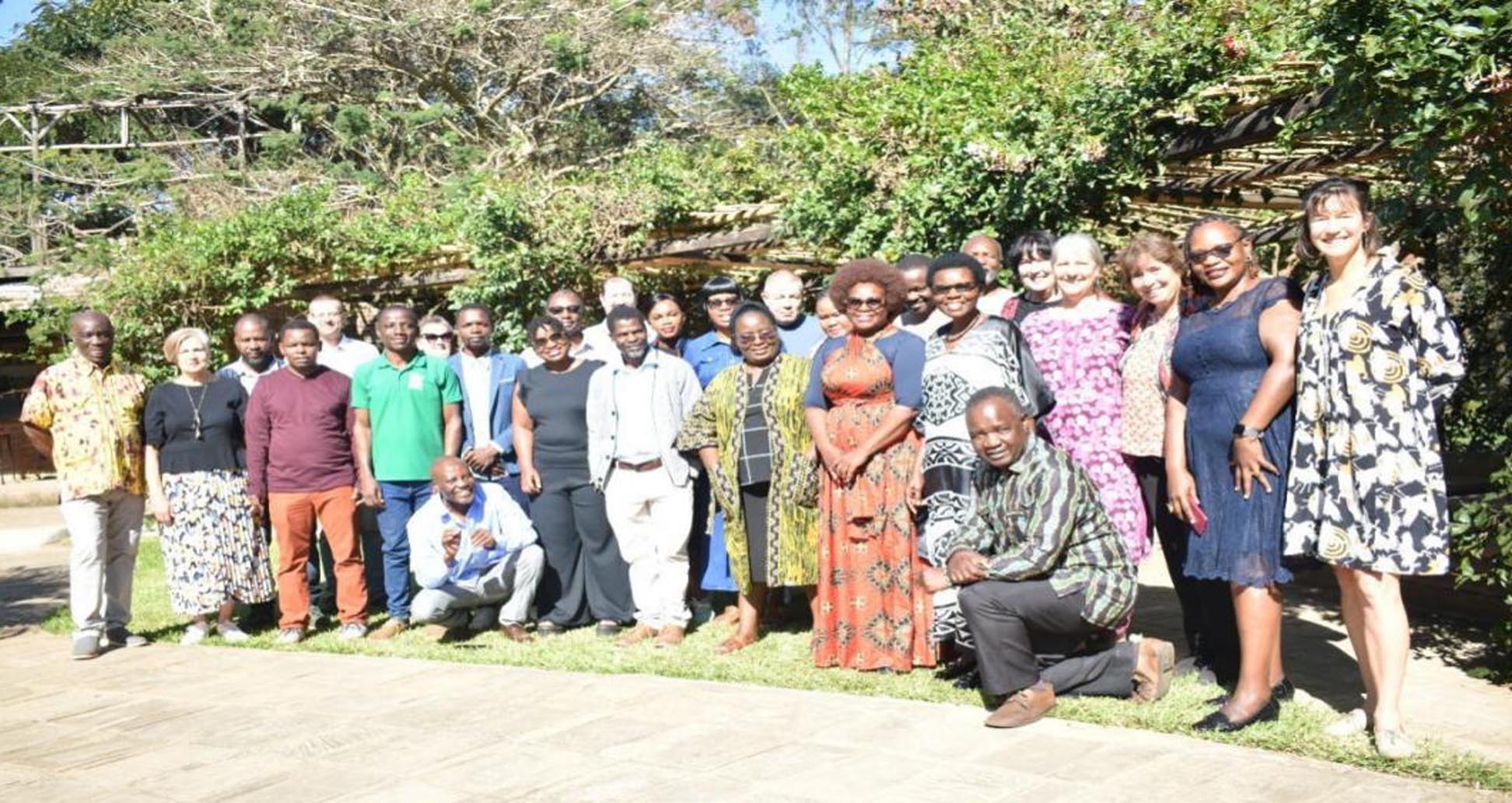
When the 15 SKI partners met in Lilongwe, Malawi, for the 2026 SKI Partners Meeting and Annual General Meeting, one message came through clearly: SKI is more than a programme. It is a partner led, movement and a shared commitment to transforming food systems in Southern Africa.
Held from 11th–14th May 2026, the meeting brought together the partner organisations from Malawi, South Africa, Zambia and Zimbabwe at an important moment in SKI’s journey. After more than a decade of working together SKI is now moving into a new phase as an independent Non-Profit Company (NPC), with its own governance structures and a Strategy.
Partners reflected on the progress made across the region, from communities deepening agroecological practice and strengthening farmer-led seed systems to growing farmer leadership, stronger knowledge networks and increased recognition of agroecology in policy spaces. The year also marked important milestones for SKI, including strong participation of the Community of Practice thematic working groups in strategy development, greater visibility in regional and global movements, and the adoption of the “Strategy to 2030”.
Looking ahead, discussions focused on what it will take to sustain SKI beyond its current funding phase. Partners agreed that while fundraising remains important, SKI’s future depends equally on continued ownership, collaboration and collective leadership. They identified the priorities that must continue: strong regional coordination; the Community of Practice and thematic working groups; support for farmer-led seed systems and agroecology at landscape level; strengthening youth leadership; advancing agroecology markets and enterprises; and ensuring farmers’ voices continue to influence policy from local to global levels.
The meeting also reaffirmed SKI’s growing role as a regional voice for agroecology through contributions to agroecology policy processes in Malawi, seed policy advocacy in Zambia, international engagement on Farmers’ Rights, and strengthened collaboration with continental movements such as AFSA.
As SKI moves through this organisational transition, partners recognised that sustaining SKI is a shared responsibility. Discussions focused not only on securing future funding, but on how to preserve the qualities that make SKI unique: strong regional coordination, shared learning, collective advocacy and a partnership built on trust.
Perhaps the spirit of the meeting was best captured during the opening session when partners were asked, “Why am I still part of SKI?” The responses revealed that SKI is much more than a network of projects and activities. They reflected a deep sense of belonging, shared purpose, and collective action. One partner described SKI as “a family.” Another said “SKI has woven us together as a collective.” Others reflected that “it is good to beat the drum together” and that “SKI is planting seeds that transform communities and the food system.”
As SKI moves into its next chapter, the Lilongwe meeting reaffirmed that its greatest strength remains unchanged: a committed network of partners working together with farmers to build resilient landscapes, protect farmers’ rights and seed diversity, and advance food sovereignty across Southern Africa.