Across Zimbabwe, farmers’ long-held right to save, exchange and reuse seed is under threat. As new legislation moves through Parliament, farmers’ organisations, civil society and faith-based groups are joining together to defend Farmers’ Rights and protect the diversity that underpins resilient food systems.
Following a stakeholder meeting in Harare convened by PELUM Zimbabwe and ZIMSOFF, the joint Farmers’ Rights – Stop UPOV Task Force delivered a petition to the Ministers responsible for Trade and Agriculture, National Seed Services and the Clerk of Parliament. Signed by farmers’ organisations, civil society and faith-based groups from across Zimbabwe, the petition outlines concerns about the risks associated with aligning Zimbabwe’s Plant Variety Protection legislation with the 1991 Act of the International Convention for the Protection of New Varieties of Plants (UPOV 91) through the proposed Plant Breeders’ Rights Bill (2025).
Should the Bill be adopted in its current form, farmers’ rights to save, exchange and reuse seed would be significantly restricted, with potentially serious consequences for rural livelihoods, food security and the resilience of farming communities. It would also undermine Zimbabwe’s strong commitment to supporting smallholder agriculture, agrobiodiversity and traditional nutritious food systems, reflected so well in the My Food is Zimbabwean campaign.
Changes to Zimbabwe’s Plant Breeders’ Rights legislation are being driven through two parallel processes. Nationally, sections of the seed industry are advocating for stronger intellectual property protection and market control over seed. Internationally, similar provisions are included in the proposed Trade Agreement between the European Union and five African countries, including Zimbabwe.
Through SKI’s collaborative partnerships, an earlier version of the petition was submitted to the European Commission, raising concerns about the seed-related provisions within the proposed Trade Agreement. The submission highlighted that these provisions risk further restricting farmers’ ability to save, exchange and adapt seed at a time when many organisations within Europe are themselves calling for more enabling seed policies that support agrobiodiversity and climate resilience.
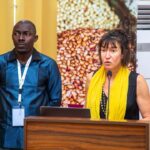
In June Dr Locardia Shayamunda from the Catholic Commission for Justice and Peace in Harare, presented the collective task force concerns directly to EU Parliamentary committees, The Director General for Trade, and the EU Food Justice Forum.
While this important advocacy continues at national and international levels, farmers across Zimbabwe are also protecting Farmers’ Rights in practice by conserving, exchanging and strengthening the seed diversity on which resilient farming systems depend. Communities are now preparing for seed and food festivals that will take place from August through September, culminating in the annual Farmers’ Dialogue and Seed Markets Day alongside the renowned Harare Good Food and Seed Festival. These festivals are more than celebrations of biodiversity, they are vital spaces where farmers exchange seed, strengthen local food economies, share knowledge and demonstrate that Farmers’ Rights are both a policy issue and a lived reality. Follow the Harare Good Food Festival online here.