Reflections and Lessons from the SKI delegation visit to the Potato Park in Peru
Fredrick Sanga, Brittany Kesselman, Rachel Wynberg
Following participation in the 11th Governing Body meeting of the International Treaty on Plant Genetic Resources for Food and Agriculture in Lima, Peru, in November 2025, representatives from two Seed and Knowledge Initiative (SKI) member organisations, the University of Cape Town (UCT) in South Africa and the Biodiversity Conservation Initiative (BCI) in Malawi, had the wonderful opportunity to visit the world renowned Potato Park. We share some reflections and learnings for our region from this inspiring trip.
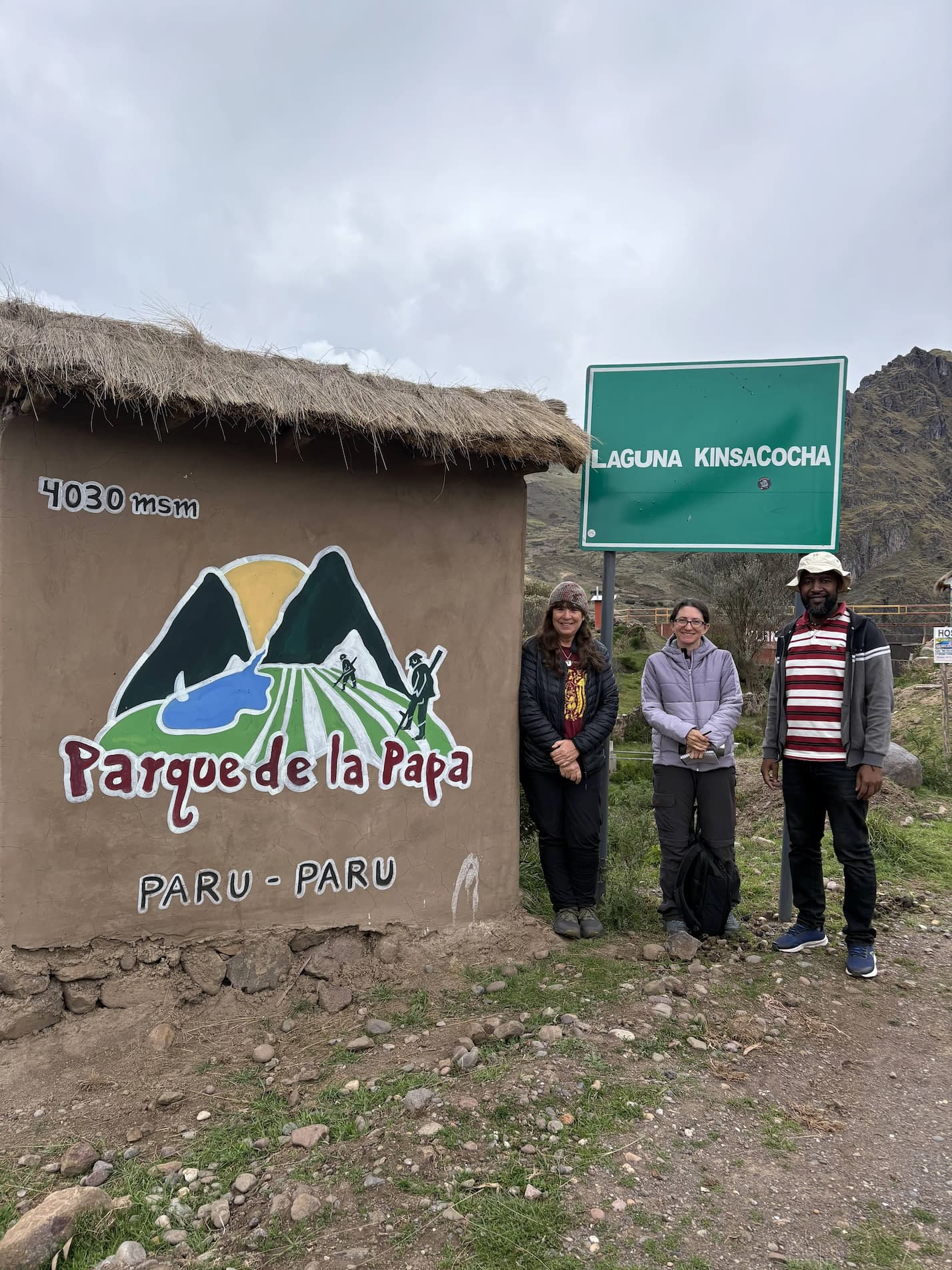
SKI team visit to the Potato Park, Peru
Overview of the Potato Park
The Potato Park is a unique biocultural heritage territory and community-led conservation initiative dedicated to safeguarding native potato varieties and mountain ecosystems across more than 9,000 hectares of land divided into three agroecological zones. It was established in 1998 by Asociación ANDES and five Indigenous Quechua communities to conserve Andean biodiversity, preserve cultural heritage and protect Indigenous Peoples’ rights and livelihoods. Situated high in the Andes Mountains within the Pisac (or Pisaq) district of the Cusco region of Peru, the park illustrates how community control over biocultural heritage, using customary norms and institutions, can contribute to ecological and developmental objectives as well as Indigenous sovereignty.
Peru is the centre of origin of the potato. Currently, the park conserves over 1,300 native potato varieties, of the approximately 3,000 varieties from Peru. Beyond cultivated potatoes and their wild relatives, the park also safeguards medicinal plants, wild tomato varieties, and other flora and fauna endemic to the region. Community conservation of water resources is a key aspect of maintaining the park’s ecosystem.
The park’s population of over 7,000 people is divided among five Indigenous communities: Paru Paru, Amaru, Sacaca, Pampallacta, and Chawaytire. These communities embrace a philosophy of living in harmony with nature, honouring the interconnectedness of all life, and passing on their traditions and knowledge to future generations. The communities, which hold collective land titles, have joined their lands and established an Association of Potato Park communities and collective governance body, as well as an inter-community benefit-sharing agreement grounded in customary law. Community-based expert working groups lead and manage activities related to potato conservation, along with economic collectives for traditional foods, textiles and weaving, medicinal plants and rural tourism that bring together the five communities.
Key features of the visit
The SKI team visited the Potato Park to learn about their practices of biodiversity conservation, culture and heritage preservation and livelihood strategies. The visit began with an explanation of the Indigenous philosophy of Sumaq Kausay (harmonious existence or the good life), which entails balance between the three communities or ayllus: the wild, the human and domesticated, and the sacred (mountains gods etc) to achieve holistic wellbeing. The Indigenous wisdom in relation to the interconnections (reciprocity) between ayllus manifests in the form of biocultural indicators related to agriculture (e.g. the flowering of a particular cactus indicates that the harvest will be good), as well as rituals and festivals to seek protection and express gratitude for abundance.
We were led through the park by several excellent Potato Park guides who explained that families have land parcels in the different ecological zones (ranging from 2,000m-4,500m in altitude), so they can produce a varied and balanced diet. The main components of traditional diets are potatoes and quinoa (grown at higher altitudes), as well as maize and beans (which grow in the lower zones). Llamas and alpacas, used for wool, leather, transport and food, are also grazed at high altitudes. Traditionally, fields are left to rest after 8-10 years of cultivation.
Production is primarily for their own consumption, and for exchange, but some surplus may also be sold. There is a tradition of barter markets going back hundreds of years. At these markets, fruits from the Amazon, starchy foods from the mountains and seafood from the coast would be exchanged.
The guides showed us a traditional agricultural calendar illustrating the four seasons, the tasks during each month and the stages of the crops. It also included the ceremonies or rituals linked to the agricultural cycle, such as the celebration of papa huatay, or Potato Day, in May, which seeks to keep the spirit of the potato in the community for the benefit of future harvests, and is now recognised nationally and internationally.
There is a seed bank in the park, designed with architects and built by the community themselves out of adobe, stone and wood with an electricity-free cooling system. The varieties stored in the seed bank are regularly loaned out to farmers to grow, and then brought back after harvest. There are also exchanges with the International Potato Centre (CIP), which has repatriated hundreds of native potato varieties which had been collected from the park area in the 1970s but since lost. Beyond the seed bank, the farmers exchange varieties amongst themselves, and experiment with adapting them to the different zones. This adaptation is becoming important as climate change-related temperature shifts have significantly elevated the altitude at which it is possible to grow potatoes.

Photo Credit: Brittany Kesselman: Local expert Mariano with a display of some of the varieties of potatoes and other crops conserved at the Potato Park
We got to sample the abundance of the park in several delicious meals—prepared by the gastronomy collective at their restaurant, Papamanka, and at the rural homesteads where we stayed the night. There were many different varieties of potatoes, quinoa, salads, maize as well as herbal teas. The food was delicious and filling, and the hosting was generous and friendly.
Other highlights of the visit related to cultural activities, such as the weaving demonstration, which illustrated how yarn is dyed, spun and woven using locally produced alpaca or llama wool and traditional natural dyes from plants. We learned about local medicinal plants and the efforts of another collective to ensure that this knowledge continues to be passed down from elders to the next generation. Wild plant gathering is subject to traditional rules that ensure the plants are not over-harvested and other creatures that depend on them are not disturbed. As one woman explained, “We have a lot of respect for Pachamama because she gives us life, the plants give life to people, animals, insects.” The collective makes and sells teas and cosmetic products using both wild and cultivated medicinal plants, although this is only at a very small scale.
Lessons for SKI
The visit to the Potato Park was highly inspiring and informative. It was a living illustration of the way Indigenous knowledge and practices can contribute to environmental and biodiversity conservation in landscapes that do not exclude people. Instead, the people are the guardians of the biodiversity, in line with their vision of balance and interconnection. These are some of the key reflections and lessons that we took away from our visit.
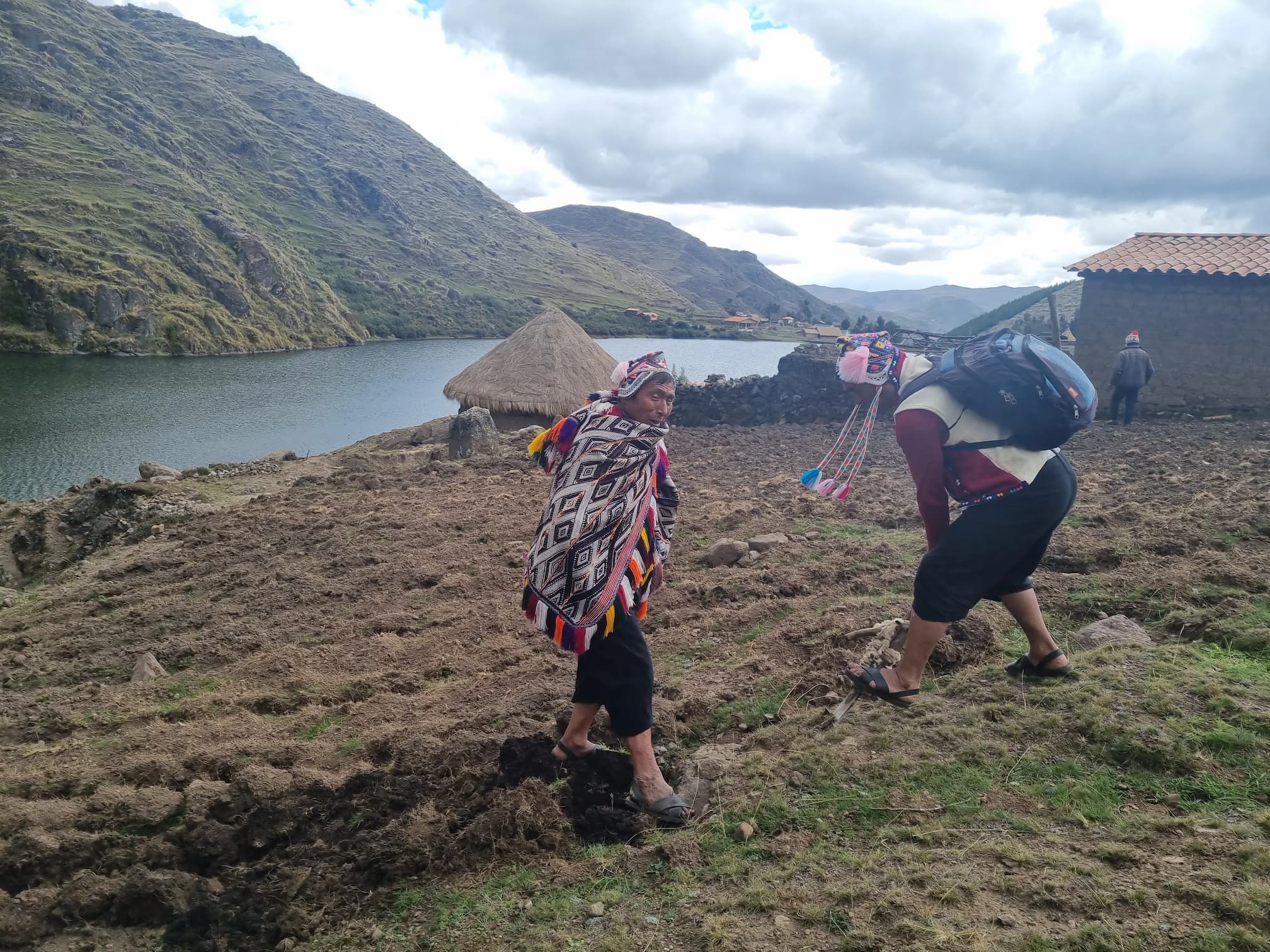
Photo Credit: Brittany Kesselman: Local experts Mariano and Lino demonstrate traditional methods of preparing potato fields for planting at the Potato Park, Peru
The Potato Park is now serving as a model for similar initiatives in the Andes, Amazon, Africa and Asia – for example, the Mijikenda community of Rabai in coastal Kenya is establishing a Biocultural Heritage Territory to protect its sacred Kaya forest and surrounding landscapes. Although the biocultural, economic and political contexts will obviously vary substantially from place to place, and can create challenges, some of these lessons and reflections will be common to many places.
A question we walked away with was: What would it take to establish a similar biocultural heritage conservation park or territory in Southern Africa? At present, SKI partners are working with relatively smaller numbers of varieties of Indigenous crops—such as sorghum, millet, cowpea and Bambara beans, or calabashes–compared to the diversity conserved at the Potato Park. However, by working together, and with other farmers, civil society groups, gene banks and governments, we might be able to set up a similar park in our region, to protect local biodiversity and celebrate the cultural heritage and Indigenous knowledge holders that have been the guardians of that biodiversity for centuries. Such a park could for example focus on Indigenous grains such as millet, and the long-discussed possibility of re-establishing a “millet belt” across the length of the continent. Small steps are already being taken towards making this dream a reality. SKI has revitalized millet cultivation across Malawi, South Africa, Zambia and Zimbabwe by harnessing the rich diversity of millet varieties through collection missions of diverse millet varieties, repatriation from national gene banks to farming communities, participatory plant breeding, participatory variety selection and enhancement, community seed banks, seed sharing, and knowledge exchange. In 2023, which was declared the International Year of Millets by the Food and Agriculture Organization of the United Nations, SKI joined farming communities in South Africa and Zimbabwe to celebrate this milestone by documenting and sharing inspiring stories of millet revival, including the revival of traditional rituals and ceremonies associated with millet. Perhaps these SKI activities can serve as the foundation for the eventual establishment of a millet park linked to biocultural heritage territories in Southern Africa. This would link well to SKI’s ongoing work that connects agroecology to living landscapes that protect biodiversity, ecosystem health, traditions and cultural values.
Here are some further resources for those wishing to visit the park, or to learn more about it and how it is being scaled out to Kenya: