Evidence for Agroecology: catalyzing transformative research partnerships across Southern Africa– By Brittany Kesselman University of Cape Town (UCT) Bio-economy Research Chair
From 3rd to 6th February 2026, the Research for Agroecology Network Southern Africa (RAENS) convened its annual reflection and planning meeting in Lusaka, Zambia, hosted by the Zambia Agriculture Research Institute. In his opening remarks, Dr Ndashe Kapulu reminded participants that agroecology “is not just a science but a promise for food security and resilience,” capturing its identity as science, practice and a social movement , and setting the tone for strengthening political support for agroecology in Zambia and beyond.
Transforming food systems through agroecology will not be possible without also transforming the way agriculture is taught, researched and understood in universities and training institutions across the region. This RAENS update builds on foundations laid through the Seed and Knowledge Initiative (SKI), where partners have long recognised the importance of integrating farmers’ knowledge and practical experience with participatory research, education and policy processes that can catalyse shifts in conventional development practices and epistemology. One way this is being advanced is through the SKI Agroecology Knowledge Network, established by the Bio-economy Research Chair at the University of Cape Town (UCT), which works to strengthen collaboration among tertiary institutions and ensure that agroecology and farmers’ rights are better reflected in teaching and curricula across the region.
RAENS seeks to build a robust, innovative and sustainable multi-actor, transdisciplinary agroecology research and knowledge network in Southern Africa. Its goals are to strengthen existing initiatives, demonstrate the scalability of agroecology, shift agricultural training and research toward regenerative approaches, and inform policies that enable wider uptake.
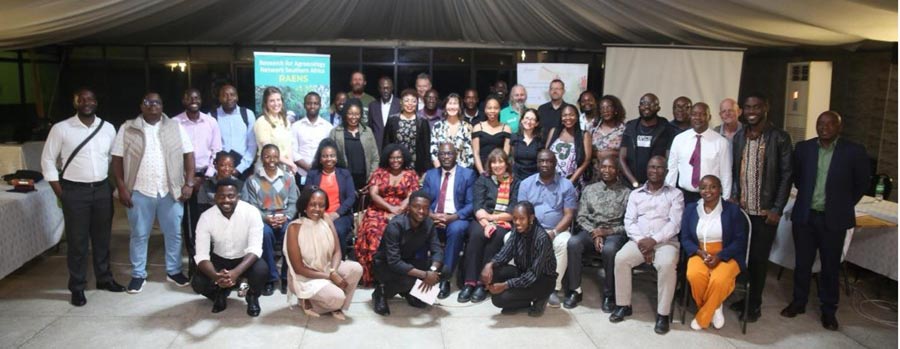
Partners and allies from Malawi, South Africa, Tanzania, Zambia and Zimbabwe reflected on progress made in the first year, including establishing national agroecology networks, selecting pilot sites for farmer-led research, and conducting scoping studies on curricula and policy. Plans for year two focus on four workstreams: building a coordinated regional research network; developing a learning network for the next generation of scholars and practitioners; strengthening knowledge management and dissemination; and advancing evidence based, gender sensitive policy engagement.
An important milestone is the creation of an agroecology knowledge hub hosted by the Transformative Partnership Platform for Agroecology, envisioned as a one stop resource centre for the region. Participants also visited the Kasisi Agricultural Training Centre, a regional leader in agroecology education and SKI member.
By the close of the meeting, partners had renewed clarity, stronger relationships and a shared commitment to advancing agroecology research, teaching and advocacy for small-scale farmers and their communities. Please check the Research for Agroecology Network Southern Africa (RAENS) https://share.google/xsrxvwQpSbpYO65D5


